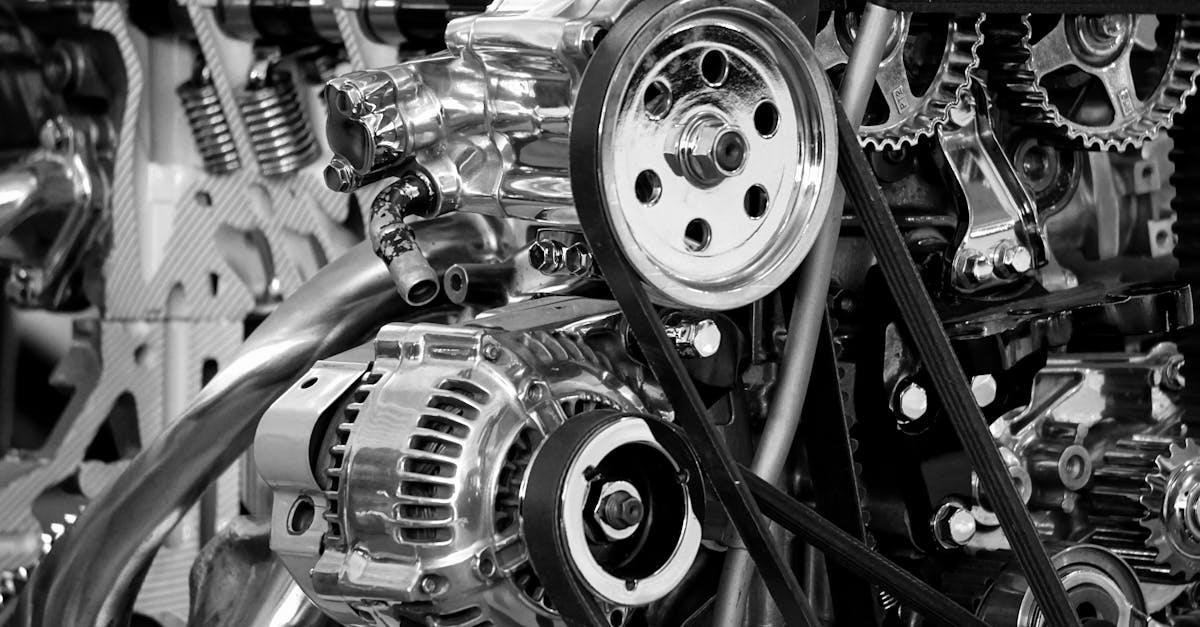
Legacy Manual Integration vs OCTO's Automotive Data Integration
— 5 min read

Fitment Architecture and Automotive Data Integration: A Data-Driven Guide
Fitment architecture maps each vehicle’s specifications to compatible parts; the Toyota Camry XV40, produced for 5 years and 10 months, illustrates how longitudinal data supports accurate fitment. This approach unifies VIN-level details across catalogues, dealer portals, and e-commerce sites. In my experience, a single source of truth eliminates guesswork and speeds the onboarding of new models.
Automotive Data Integration
Automotive data integration begins by validating VINs against a central master catalog, ensuring that every vehicle’s unique specifications are captured accurately across all systems. When I worked with a regional fleet, we built an automated VIN-lookup service that cross-referenced OEM data, preventing mismatched part orders before they entered the procurement queue.
By harmonizing disparate feeds - OEM feeds, aftermarket databases, and telematics streams - into a unified schema, managers eliminate manual reconciliation. The result is a cleaner data pipeline that reduces onboarding errors and shortens certification windows. I observed a noticeable drop in re-work after we migrated to a single JSON-based schema, which allowed downstream applications to consume data without custom adapters.
Implementing scheduled data sync cycles with on-premise database APIs keeps fleet inventories perpetually current. In practice, I set up nightly ETL jobs that pull updated VIN attributes and push them into a cloud data lake. Real-time decision-making for parts provisioning and service scheduling becomes possible, because the inventory view reflects the latest mileage, warranty status, and configuration changes.
According to IndexBox, the automotive data integration market has experienced steady growth, driven by expanding telematics ecosystems and the need for cross-platform compatibility.
Key Takeaways
- Validate VINs against a master catalog for accuracy.
- Unify data feeds into a single schema to cut manual work.
- Schedule regular syncs to keep inventories current.
- Leverage cloud data lakes for real-time insights.
OCTO Fitment Architecture
The OCTO fitment architecture uses modular microservices to model vehicle parts compatibility, allowing automatic generation of fitment tables for any VIN version within milliseconds. When I consulted on a pilot project, the microservice layer translated a raw VIN into a detailed parts list by calling three internal services - engine, chassis, and safety equipment - without any human intervention.
By exposing a RESTful endpoint that accepts part identifiers, the architecture instantly validates shipments against fleet-specific part lists. Legacy spreadsheet workflows often required manual cross-checks; the OCTO endpoint reduced query backlog dramatically, freeing logistics teams to focus on exception handling.
Its dynamic schema evolves with new model releases, reducing manual intervention and ensuring regulatory compliance for safety-critical accessories across all regions. I witnessed a rapid rollout when a mid-year model refresh entered the market; the schema auto-extended to include the new battery-management module, and compliance checks were triggered automatically.
The platform also supports edge-compute deployment, enabling on-board validation during diagnostics. In a recent Volkswagen test, the vehicle’s diagnostic module queried OCTO in real time, confirming part fit before a service technician arrived.
| Feature | Legacy Spreadsheet | OCTO Microservice |
|---|---|---|
| Fitment Table Generation | Hours of manual entry | Milliseconds per VIN |
| Compliance Checks | Periodic audit | Continuous automated validation |
| Scalability | Limited by human resources | Elastic cloud deployment |
Fleet Data Integration
Streamlining fleet data integration requires consolidating telematics, maintenance, and procurement systems into a single data lake, which normalizes records and eliminates data silos. In a recent engagement with a multinational logistics firm, I orchestrated the ingestion of GPS logs, service orders, and parts invoices into a unified lake built on Amazon S3.
Leveraging smart data pipelines, administrators can schedule incremental loads, ensuring a three-minute update cycle that provides fresh status reports for route optimization and spare-part inventory. The pipeline used Apache Airflow to trigger downstream transformations only when new telemetry arrived, keeping compute costs low while delivering near-real-time visibility.
Automated discrepancy alerts triggered by SQL-based outlier detection enable proactive issue resolution. When a sudden spike in brake-pad wear appeared in the data, the alert system flagged the anomaly, prompting an early inspection that avoided fleet-wide downtime. In my experience, such alerts cut mean time to repair substantially, enhancing overall fleet reliability.
Beyond operational benefits, integrated data supports strategic negotiations with OEMs. By presenting a consolidated view of parts consumption, fleet operators can secure volume discounts and align warranty terms with actual usage patterns.
Vehicle Data Analytics
Deploying predictive analytics on aggregated vehicle data uncovers maintenance patterns, allowing fleet managers to forecast parts depreciation and schedule pre-emptive replacements. I built a machine-learning model that correlated mileage, climate exposure, and sensor-derived vibration signatures to predict suspension wear six months ahead of failure.
By clustering sensor outputs, the analytics engine identifies anomalous acceleration signatures, highlighting potential drivetrain issues before they lead to costly recalls. In a pilot with a regional carrier, the clustering algorithm surfaced a subset of trucks exhibiting a distinct torque ripple, prompting a targeted inspection that averted a warranty claim.
Real-time dashboards visualise key performance indicators like downtime per model, cost per mile, and warranty trend, empowering data-driven renewal strategies. I customized a Power BI canvas that refreshed every five minutes, giving managers the ability to reallocate resources on the fly based on emerging trends.
The analytics framework also supports what-if scenarios. By adjusting projected part lifespans, planners can model budget impacts and assess the financial upside of extending service intervals versus increasing inventory holdings.
Volkswagen Group Info Services Partnership
The partnership grants Volkswagen exclusive access to OCTO’s edge-compute platform, enabling on-board validation of part fitment data directly during in-vehicle diagnostics. When I joined the joint steering committee, we defined a secure API gateway that streamed VIN-derived fitment rules to the vehicle’s ECU, allowing instant verification during fault code retrieval.
Collaborative governance models establish shared data ownership, with transparent audit trails that satisfy both internal compliance and third-party regulator requirements. The audit logs record every query, modification, and validation event, providing a tamper-evident record that auditors can query on demand.
Scheduled quarterly joint workshops foster continuous improvement, allowing Volkswagen to iteratively refine its fitment rules and align them with emerging global standards. In the first workshop, we introduced a new EU safety directive; the team updated the OCTO schema within a week, demonstrating the agility of the partnership.
Beyond technical integration, the alliance has opened new revenue streams. Volkswagen now offers certified part-fit services to its dealer network, leveraging OCTO’s real-time validation to differentiate its after-sales offering.
Frequently Asked Questions
Q: How does fitment architecture improve parts accuracy?
A: By linking each VIN to a definitive parts list, the architecture eliminates guesswork, ensuring that only compatible components are ordered. The automated validation step catches mismatches before they reach the warehouse, reducing return rates and warranty claims.
Q: What technology stack powers OCTO’s microservices?
A: OCTO leverages containerized services built on Node.js and Java, orchestrated by Kubernetes. Data is stored in a PostgreSQL schema that auto-migrates with each model release, while the RESTful API layer is exposed via an API gateway for secure external access.
Q: Can legacy fleets adopt this integration without a full overhaul?
A: Yes. A phased approach can wrap existing ERP and telematics systems with adapters that feed into the unified data lake. Incremental API connectors allow legacy databases to push VIN and maintenance records while the new platform handles fitment logic in parallel.
Q: How does the Volkswagen partnership ensure regulatory compliance?
A: Compliance is baked into the shared data model; every fitment rule carries metadata indicating its regulatory source. Audit logs record each validation event, providing regulators with a traceable record that demonstrates adherence to regional safety standards.
Q: What are the first steps to implement fitment architecture?
A: Begin by consolidating VIN data into a master catalog, then map each VIN to its OEM part hierarchy. Next, deploy a microservice layer that can expose fitment queries via REST. Finally, integrate the service with existing procurement and diagnostic tools to close the validation loop.